 contact@arkeotopia.org
Call for Papers: Visualizing Archaeology
Call for papers: Colloquium on archaeological visualization for general and academic audiences at the EAA’s annual meeting, 26–29 August 2026. Submit by February 4
 |
 |
 |
 |


Call for papers: Colloquium on archaeological visualization for general and academic audiences at the EAA’s annual meeting, 26–29 August 2026. Submit by February 4

On the occasion of the 30th Annual Meeting of the European Association of Archaeologists, to be held from August 28 to 31 in Rome (Italy), a call for papers has been launched for a colloquium on the archaeo-violin making, or how to understand instruments from an archaeological point of view, from the Celts to the Middle Ages. Answer by February 4, 2024.

By experimenting with the biological sex and the symbolic sex of animals, our ancestors left for us evidence of their high level of abstraction and their understanding of the world, more complex than we had previously imagined. iconography of the Near East tells us about the complex thinking of Bronze Age Syrians.

Professionals, students and volunteers in the fields of archeology and art history are invited to the Meetings around European Archeology (MEA), on Saturday December 7, 2013 at 2:30pm, at the Maison des Associations of the 7th district in Paris, whose theme will be: Archeology, a Mutating Discipline.
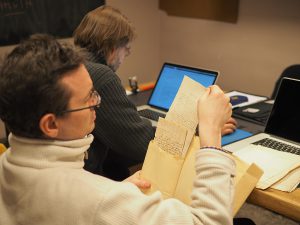
The WikiTopia Archives program launched in March 2018 by the association ArkéoTopia®, an alternative approach to archaeology, aims to encourage the digitization of archival documents belonging to private individuals in order to ensure their free and public distribution as well as the study of these documents via Open source tools.
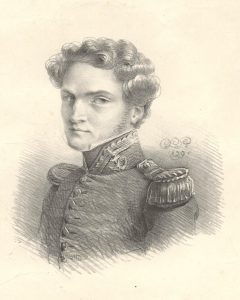
Although the coasts of New Caledonia have always been the scene of countless shipwrecks, that is unknown shipwrecks brought to the attention of ArkéoTopia, another way for archaeology by one of its members which led to the refloating of the Aventure in terms of research. The first official excavation of the Corvette in 1975 by ship's lieutenant, Patrick Banuls, and the documents which came from it, led ArkéoTopia to collaborate with Fortunes de Mer Calédonniennes (Nouméa) on a new excavation of the wreck in July 2018. Before the results and the reports of the excavation comparing the 1975 and 2018 operations are published, we will go through a little bit of history: on one hand, the journey of Eugène du Bouzet, captain of the Aventure at the time of the shipwreck in 1855 and that of the French Navy corvette, against the backdrop of the geo-political context of the time, and on the other hand, the adventure of the first mission in 1975.
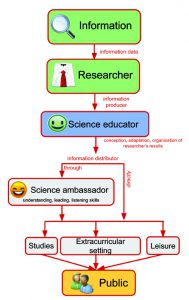
Science and technology are today clearly part of our everyday lives. That is why during the last forty years we have seen the development of the practice of transferring scientific culture from those who produce it, researchers, to those who benefit from it, the general public. So, a new actor appeared who J.-O. Gransard-Desmond present from a new angle with "Bridging the gap between the scientific community and society".

In the context of our Irish theme for the year 2009, the Centre Culturel Irlandais (Irish Cultural Centre – CCI) was a must to discover the history of the Irish and their community in France and Paris. So, on Wednesday 11th March, ArkéoTopia® brought together its members and a few curious souls for an ArkéOdyssée on-site followed by a discussion at the Saint-Hilaire pub.

To develop the methodology in archeology, Prof. Margueron conducted an analysis crossing the work of architects and archaeologists. With computer knowledge of Dr. Gransard-Desmond and his intervention at the Red House at Mari site (Syria), a communication resulted from this « From plan to volume: the need for archaeological analysis in 3D modeling » at the Journées d'Informatique et Archéologie de Paris (JIAP) 2010.

In response to controversies which have been rocking the field of archaeology for several years, ArkéoTopia was asked to contribute to the debate in the review Internet Archaeology with "Can we really differentiate between treasure hunters and non-professional archaeologists?" (Dr. Gransard-Desmond).

